
📑 Contents
📌 Quick Summary: Discover how bowhead whales’ enhanced DNA repair mechanisms contribute to their remarkable longevity in this groundbreaking Nature study.
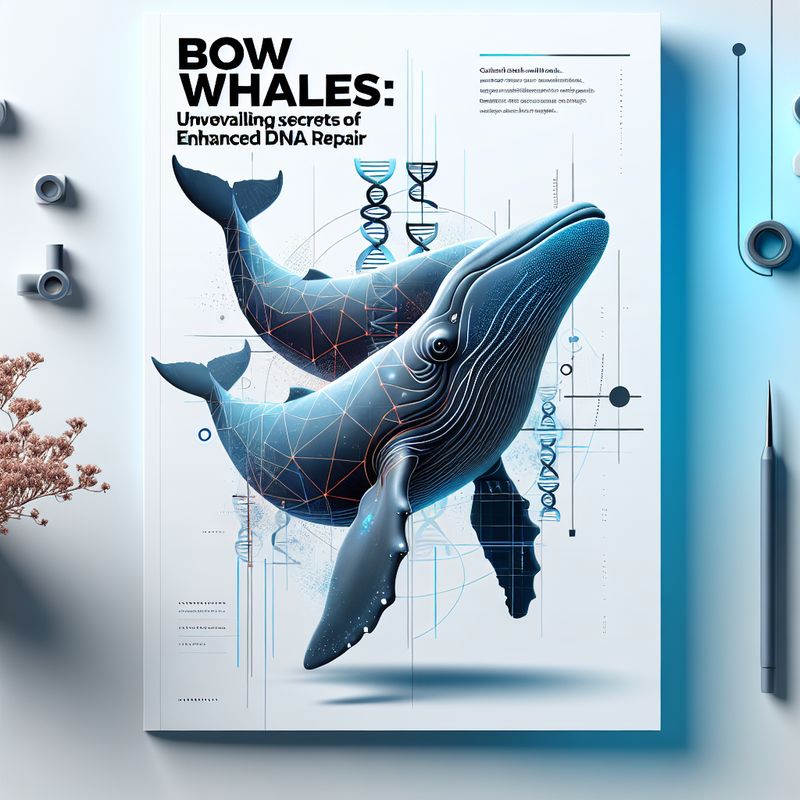
Bowhead Whales: Unveiling Secrets of Enhanced DNA Repair
Summary: Nature, Published online: 28 November 2025; [doi:10.1038/s41586-025-09952-6](https://www.nature.com/articles/s41586-025-09952-6)
The bowhead whale, a remarkable marine species known for its impressive longevity, has recently become the focus of intriguing scientific research. A study published in *Nature* explored the unique DNA repair mechanisms that enable these whales to live for over two centuries. This groundbreaking research not only sheds light on the mysteries of aging but also raises questions about the potential applications of these findings in fields such as medicine and genetics. With the advent of AI and machine learning technologies, understanding the bowhead whale’s genetic makeup may pave the way for advancements in DNA analysis and enhanced life sciences.
Overview
Bowhead whales, scientifically referred to as *Balaena mysticetus*, are one of the longest-living mammals on Earth, with lifespans that can exceed 200 years. Their unique biology has captivated scientists for decades, particularly in the context of aging and longevity. Recent research focuses on the remarkable DNA repair mechanisms present in these creatures, which allow them to maintain cellular integrity over extended periods.
The study published in *Nature* aimed to explore these mechanisms in depth. It revealed that bowhead whales possess genetic attributes that significantly enhance their ability to repair DNA damage. This advancement in understanding could have profound implications for human health, particularly in addressing age-related diseases and improving our comprehension of cellular longevity.
📚 Related Articles
Key Details
📚 Related Articles
The study’s findings, thoroughly examined in the context of author correction in scientific research, emphasized the importance of DNA repair mechanisms in bowhead whales. Researchers employed advanced methodologies, including genetic sequencing and comparative genomics, to analyze the bowhead whale’s genome. They discovered that specific genes associated with DNA repair were not only present but were also more active than those in shorter-lived species.
Key genes identified in the study include those involved in the base excision repair pathway, which is crucial for fixing single-strand breaks in DNA. This pathway is particularly important given the high levels of oxidative stress that long-lived animals like bowhead whales may experience due to environmental factors and metabolic processes. The study’s authors highlighted that these enhanced DNA repair capabilities may be a crucial factor in the whales’ longevity, allowing them to maintain cellular health and integrity throughout their extended lives.
Moreover, the integration of AI applications in genetics was showcased in this research, which utilized machine learning for DNA analysis. By processing large sets of genomic data, researchers were able to identify patterns and correlations that would have been challenging to discern through traditional methods. This innovative approach not only streamlined the analysis but also underscored the potential of machine learning in advancing our understanding of complex biological systems.
Impact
The implications of these findings extend far beyond the study of bowhead whales themselves. Understanding the DNA repair mechanisms in these creatures could inform new strategies for combating age-related diseases in humans. As scientists delve deeper into the genetic secrets of longevity, potential applications in regenerative medicine and aging research become increasingly plausible.
Additionally, the study highlights the significance of cybersecurity for academic authors. As more researchers publish sensitive genetic data and findings, ensuring the integrity of this information becomes paramount. Protecting against data breaches and maintaining the credibility of scientific research is crucial, especially in a field where advancements can lead to significant societal benefits.
Furthermore, this research opens doors for interdisciplinary collaboration between geneticists, marine biologists, and bioinformaticians. By pooling resources and expertise, the scientific community can better explore the implications of these findings on a broader scale, potentially leading to transformative advancements in both human health and conservation efforts.
Insights
The DNA repair mechanisms in bowhead whales represent a fascinating intersection of evolutionary biology and modern technology. As researchers continue to decipher the genetic makeup of these magnificent creatures, the potential for breakthroughs in medical science grows. The role of AI and machine learning in this research process cannot be overstated, as these technologies are redefining our approach to genetic analysis.
Moreover, the ethical considerations surrounding genetic research, particularly with regard to longevity and regenerative medicine, must be addressed. As we gain more insight into the secrets of bowhead whales, the conversation surrounding the implications of extending human lifespan will become increasingly relevant.
Takeaways
1. Bowhead whales exhibit enhanced DNA repair mechanisms that contribute to their remarkable longevity.
2. Advanced genetic research, aided by AI and machine learning, is crucial for unraveling the complexities of these mechanisms.
3. Understanding these biological processes may lead to significant advancements in regenerative medicine and aging research.
4. Ensuring cybersecurity for academic authors is essential to protect sensitive genetic information and maintain the integrity of scientific research.
Conclusion
The recent findings on bowhead whales and their enhanced DNA repair mechanisms mark a significant milestone in the fields of genetics and longevity research. As scientists continue to explore the potential applications of these discoveries, we stand at the cusp of a new era in medicine and biotechnology. The interplay of traditional biological research and cutting-edge technologies like AI promises to unlock further secrets of life, longevity, and health, with implications that could resonate across various scientific disciplines. Understanding these unique adaptations not only enriches our knowledge of the natural world but also offers hope for healthier, longer lives for humans.