The Foldable Revolution: Why 2025 Is the Year of Foldable Smartphones
Category: Smartphones & Hardware Trends
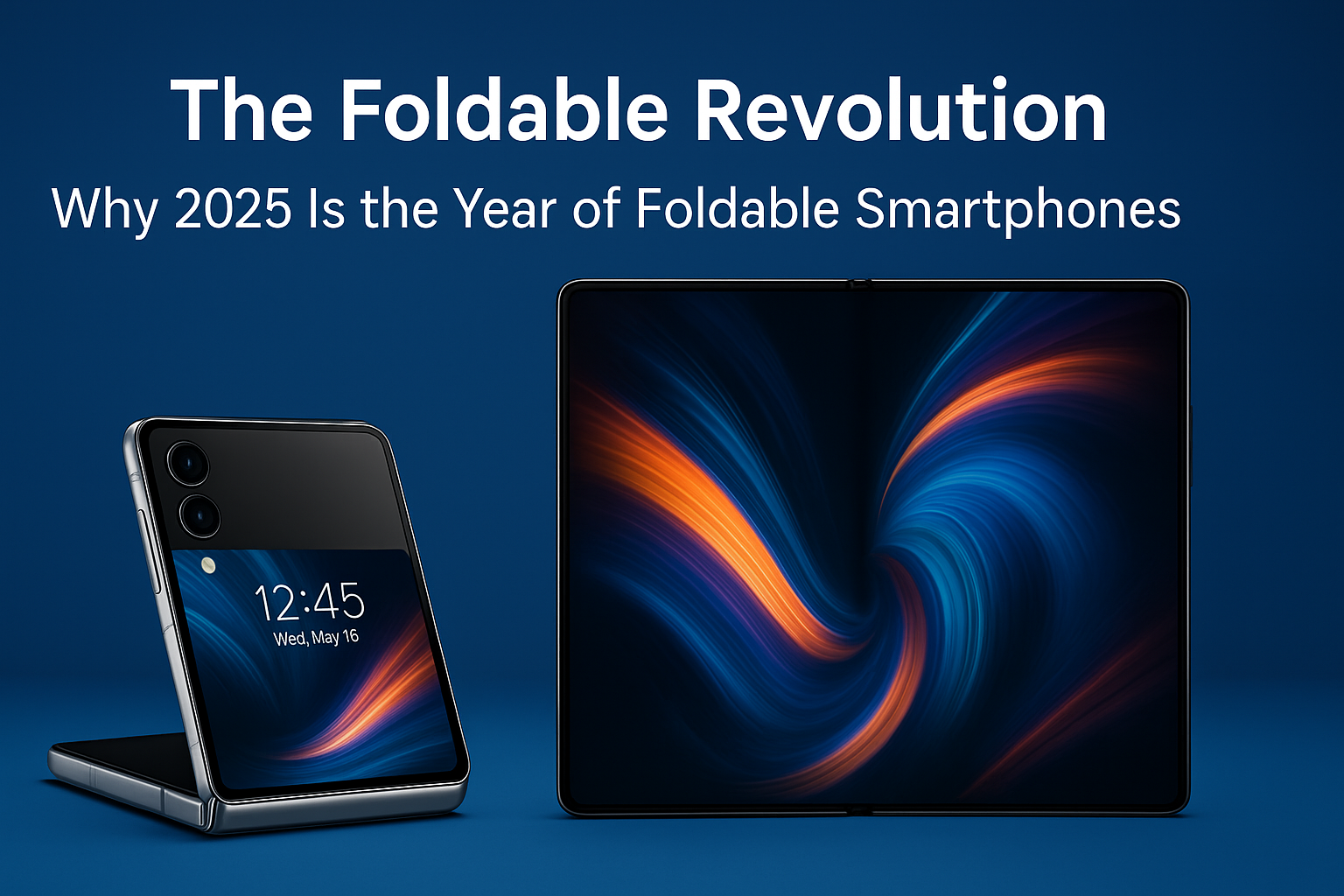
Smartphone design has stayed almost the same for more than a decade: a flat glass slab, slightly thinner every year, with a little more power and a slightly better camera. But 2025 feels different. This is the year when foldable smartphones stop being a futuristic experiment and start becoming a mainstream reality.
Foldable phones combine two worlds in one device: the portability of a regular phone and the big-screen experience of a tablet. For power users, gamers, content creators and even casual users who love Netflix and YouTube binges, foldables are starting to look like the most exciting upgrade you can buy in 2025.
On HungryTechMind, we have already explored powerful GPUs like the Nvidia RTX 5070 – the upcoming powerhouse GPU and camera monsters like the Xiaomi 17 Ultra triple-camera beast . Now it’s time to zoom out and see how foldable hardware is reshaping the entire smartphone experience.
Why Foldable Smartphones Are Exploding in 2025
Foldable phones are no longer just concept devices behind glass at tech expos. In 2025, multiple brands have launched mature, polished foldables with:
- Better hinges and more durable folding mechanisms
- High-refresh-rate OLED and AMOLED foldable displays
- Flagship-level chipsets for gaming and multitasking
- Optimized software experiences for split-screen and multi-window usage
The biggest change is that foldables are now practical. Early generations suffered from fragile screens, thick bodies, visible creases and sky-high prices. Today, manufacturers have refined designs to make them thinner, lighter and more durable, while also slowly pushing prices downward.
And this transformation fits perfectly into a world where people do almost everything on their phone — work, entertainment, gaming, content creation and social media. When a single device can act as a phone in your pocket and a tablet in your hand, it naturally becomes more attractive.
Hardware Evolution: What Has Changed Inside a Foldable Phone
Under the hood, today’s foldable phones are monsters. They pack the same flagship-grade processors you expect from top premium devices, often paired with large RAM options and high-speed storage.
Think of them as the smartphone equivalent of a high-end GPU upgrade. Just like Nvidia’s RTX 5070 is expected to push graphical performance to the next level for gamers and creators, modern foldable phones push mobile productivity and multitasking to a whole new space.
Key hardware improvements in 2025 foldables include:
- Advanced Foldable Displays: Flexible OLED / AMOLED panels with higher brightness, smoother refresh rates and improved crease management.
- Reinforced Hinges: New hinge mechanisms designed to withstand hundreds of thousands of folds, with better dust and debris resistance.
- Flagship Chipsets: Top-tier SoCs ensure that heavy apps, gaming and multi-window use run fluidly even on the bigger unfolded screen.
- Larger Batteries & Faster Charging: Bigger displays demand more power, so brands are packing larger batteries and faster charging to keep up.
- Pro-Grade Cameras: Foldables are no longer compromising on camera quality. Many now rival or even beat regular flagship phones.
If you’ve been following devices covered in our guide Top Trending Smartphones in India – November 2025 , you already know how rapidly hardware is evolving. Foldables are part of the same wave, but with an extra dose of creativity in design.
Real-World Benefits: Why Users Are Considering Foldables
Beyond the “wow” factor of a folding screen, users are starting to see real-world advantages that justify the investment. Some of the most common use cases in 2025 are:
1. Productivity and Work on the Go
When unfolded, a foldable phone can offer a display closer to a small tablet. That means:
- Comfortable reading and editing of documents
- Running two or three apps side by side
- Better email and chat management during work hours
- More screen space for spreadsheets, notes and research
For remote workers, freelancers and business users, this is extremely valuable. Instead of carrying both a phone and a tablet, a single foldable can handle most tasks.
2. Media, Entertainment and Gaming
A bigger screen instantly upgrades the experience of:
- Watching movies and web series
- Streaming sports and live events
- Playing immersive mobile games
- Browsing social media and short-video platforms
When paired with powerful hardware (similar to stepping up from a basic GPU to an enthusiast card like the RTX 5070), foldable phones can deliver console-like mobile gaming and theatre-style viewing in a compact form factor.
3. Content Creation and Multitasking
Creators can benefit from:
- Editing photos and videos on a larger canvas
- Using one half of the screen as a preview and the other for tools
- Running editing apps, reference material and messages simultaneously
Combined with modern camera systems — like the powerful setups we see in phones such as the Xiaomi 17 Ultra triple-camera beast — foldables become mini production studios in your pocket.
Challenges: Why Foldables Are Still Not for Everyone
Despite all the hype and visible progress, foldable smartphones do come with some important downsides that you should consider before buying:
- Price: Foldables are still more expensive than regular flagship phones. You pay extra for the flexible display and complex hinge engineering.
- Durability Concerns: Although hinges and displays are stronger now, they are still moving parts. Long-term durability and wear and tear remain key questions for many buyers.
- Thickness and Weight: Even with improvements, foldables are usually thicker and heavier than typical non-folding flagships.
- App Optimization: Not every app is perfectly optimized for foldable screens. Some layouts may feel stretched or inconsistent when switching between folded and unfolded modes.
- Repair and Resale: Repairs can be more expensive, and the second-hand market for foldables is still evolving.
However, these issues are shrinking with every generation. As more brands enter the foldable market, competition will naturally push for better durability, friendlier pricing and more polished user experiences.
Foldables vs Traditional Flagships: Which Should You Choose?
If you’re currently choosing your next device and exploring the top trending smartphones in India , you might be wondering whether to pick a standard flagship or make the jump to a foldable.
Choose a foldable smartphone if:
- You love multitasking and productivity on the go
- You consume a lot of media and want a bigger screen
- You create content, edit photos/videos or manage multiple workflows on your phone
- You’re excited to adopt the next generation of smartphone hardware
Stick to a traditional flagship if:
- You prefer a lighter, slimmer device
- You’re worried about durability and repair costs
- You don’t really use multi-window or tablet-like features
- Your budget is tight and value-for-money is your top priority
The good news is that 2025 offers powerful options on both sides. Whether you’re into classic flagships, camera-centric beasts like the Xiaomi 17 Ultra, or cutting-edge foldables, you have more choice than ever before.
Final Thoughts: Foldables Are Building the Future of Mobile
Foldable smartphones are no longer a tech demo — they are turning into a serious and fast-growing category. With stronger hardware, better displays, smarter software and more brands entering the space, 2025 is a milestone year for this form factor.
Just like high-end GPUs such as the Nvidia RTX 5070 are shaping the future of PC gaming and AI workloads, foldable phones are shaping the future of mobile computing, productivity and entertainment.
If you are planning your next upgrade, keep an eye on the foldable segment — and don’t forget to explore our detailed guides like Top Trending Smartphones in India – November 2025 for more insights. The smartphone in your pocket may soon unfold into something much more powerful than you expect.