
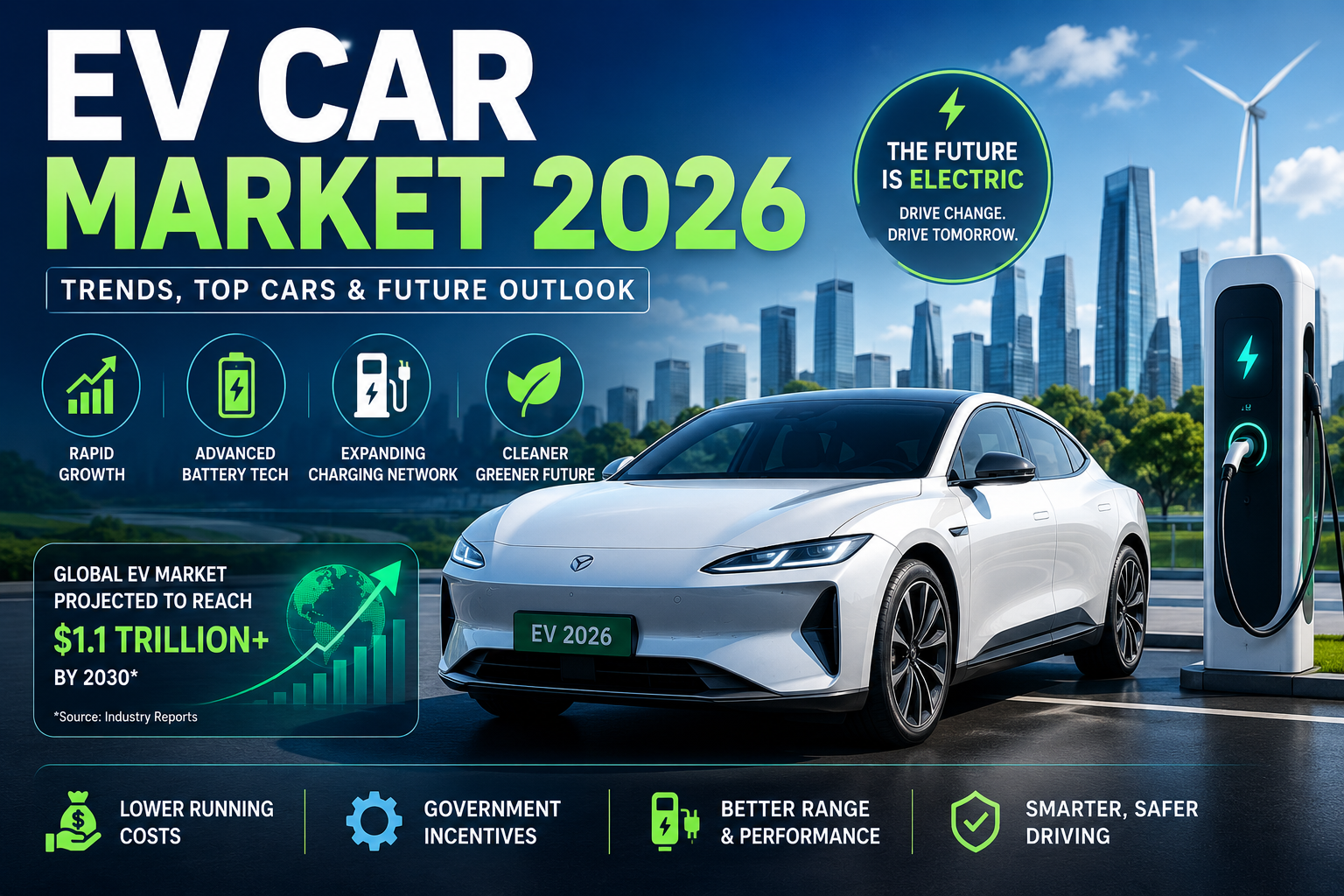
EV Car Market 2026: Latest Trends, Best Electric Cars & Future Outlook
EV Car Market in 2026: The Electric Revolution Is Here
The global electric vehicle (EV) market is growing faster than ever. With rising fuel prices, stricter emission regulations, and major advances in battery technology, millions of drivers are switching from gasoline-powered vehicles to electric cars.
In 2026, buying an EV is no longer just an environmentally friendly choice—it’s becoming a smart financial decision. Manufacturers are introducing longer-range vehicles, faster charging, and more affordable models that appeal to everyday drivers.
Whether you’re considering your first EV or simply following the latest automotive trends, here’s everything you need to know.
Why the EV Market Is Growing So Quickly
Several key factors are driving the rapid expansion of electric vehicles:
- Lower running and maintenance costs
- Government incentives and tax benefits
- Expanding fast-charging networks
- Better battery technology with longer driving range
- Growing consumer awareness about climate change
- Increasing competition among manufacturers
As more companies enter the market, buyers now have choices across every price segment.
Top EV Trends in 2026
1. Longer Battery Range
Modern EVs now commonly offer between 500–800 km of driving range on a single charge, reducing range anxiety significantly.
2. Ultra-Fast Charging
New charging technology allows many vehicles to charge from 10% to 80% in under 20 minutes, making long-distance travel much easier.
3. AI-Powered Driving Experience
Artificial intelligence now powers:
- Smart route planning
- Battery optimization
- Voice assistants
- Predictive maintenance
- Advanced driver assistance systems
4. Affordable Electric Cars
Competition has lowered prices, making EV ownership accessible to more families than ever before.
5. Better Battery Technology
Solid-state battery research continues to progress, promising:
- Higher energy density
- Faster charging
- Improved safety
- Longer lifespan
Best Electric Cars to Watch in 2026
Some of the most exciting EVs include:
- Tesla Model 3 Highland
- Tesla Model Y
- Hyundai Ioniq 9
- Kia EV9
- BYD Seal
- Volvo EX30
- BMW i5
- Mercedes-Benz CLA EV
- Tata Harrier EV
- Mahindra BE 6
These vehicles combine impressive range, advanced technology, and enhanced safety features.
EV Charging Infrastructure Is Expanding
One of the biggest barriers to EV adoption has always been charging availability. Fortunately, charging infrastructure is improving rapidly.
Drivers now benefit from:
- More highway fast chargers
- Home charging solutions
- Workplace charging stations
- Shopping mall charging hubs
- Smart charging apps with real-time availability
Many cities are investing heavily in public charging networks.
Are Electric Cars Cheaper to Own?
Although the purchase price can still be higher than a comparable petrol vehicle, long-term ownership costs are often lower.
Savings include:
- Lower electricity costs compared to fuel
- Fewer moving parts requiring maintenance
- No engine oil changes
- Reduced servicing costs
- Potential government incentives
For drivers with high annual mileage, the total cost of ownership can be significantly lower over several years.
Challenges Facing the EV Market
Despite impressive growth, the industry still faces challenges:
- High battery replacement costs
- Limited charging access in some rural areas
- Raw material supply concerns
- Battery recycling infrastructure
- Initial purchase price for premium models
Automakers and governments are actively working to address these issues.
What Does the Future Hold?
Industry experts expect EV sales to continue rising throughout the decade. Future developments are likely to include:
- Solid-state batteries
- Wireless charging
- Autonomous driving improvements
- Vehicle-to-grid (V2G) technology
- AI-powered energy management
- Lower battery costs
Electric vehicles are expected to become the default choice for many new car buyers.
Should You Buy an EV in 2026?
If you have access to reliable charging and want lower running costs, quieter driving, and reduced emissions, 2026 is an excellent time to consider an electric vehicle.
With improved range, growing charging networks, and increasing competition among manufacturers, today’s EVs are more practical than ever.
Frequently Asked Questions
Is an electric car worth buying in 2026?
Yes. Improved battery technology, lower operating costs, and expanding charging infrastructure make EVs an attractive option for many drivers.
How long do EV batteries last?
Most modern EV batteries are designed to last 8–15 years or more, depending on usage and climate.
Are EVs cheaper than petrol cars?
While the upfront cost can be higher, lower fuel and maintenance expenses often reduce the total cost of ownership over time.
Which EV has the longest range?
Several premium models now offer ranges exceeding 700 km under ideal conditions, with more long-range options entering the market each year.
Final Thoughts
The EV revolution is accelerating, and 2026 is shaping up to be a landmark year for electric mobility. Whether you’re looking for lower ownership costs, cutting-edge technology, or a greener way to travel, today’s EV market offers more choices than ever before. As charging networks expand and battery technology continues to improve, electric cars are set to play a central role in the future of transportation.